
LASER VISION CORRECTION
Understanding your options for reducing dependence on glasses and contact lenses.
Laser vision correction isn't right for everyone. See below for Eligibility.

OVERVIEW
If glasses or contacts interfere with your daily activities, laser vision correction may be an option. At Horta-Santini Eye Care, we offer two procedures: PRK and SMILE.
Both reshape your cornea, the clear front part of your eye, so light focuses where it should. As a result, many people find they need glasses or contacts less often or not at all. The process begins with an evaluation to determine whether laser vision correction is right for you.

WHAT LASER VISION CORRECTION CAN CORRECT
Nearsightedness (myopia): a condition where distant objects look blurry, while close objects look clearer.

Farsightedness (hyperopia): a condition where close objects look blurry, and distant objects may look blurry as well.
Astigmatism: this condition occurs when the cornea is unevenly curved, which blurs or distorts vision at any distance.
WHAT IT CAN’T DO
Laser vision correction doesn't stop presbyopia, the natural loss of close-up focus that starts in your 40s. Even with sharp distance vision after surgery, you may still need reading glasses as you get older.
It also doesn't treat eye diseases like cataracts, glaucoma, or retinal conditions. It corrects how your eye focuses light, but it does not treat the health of the eye.
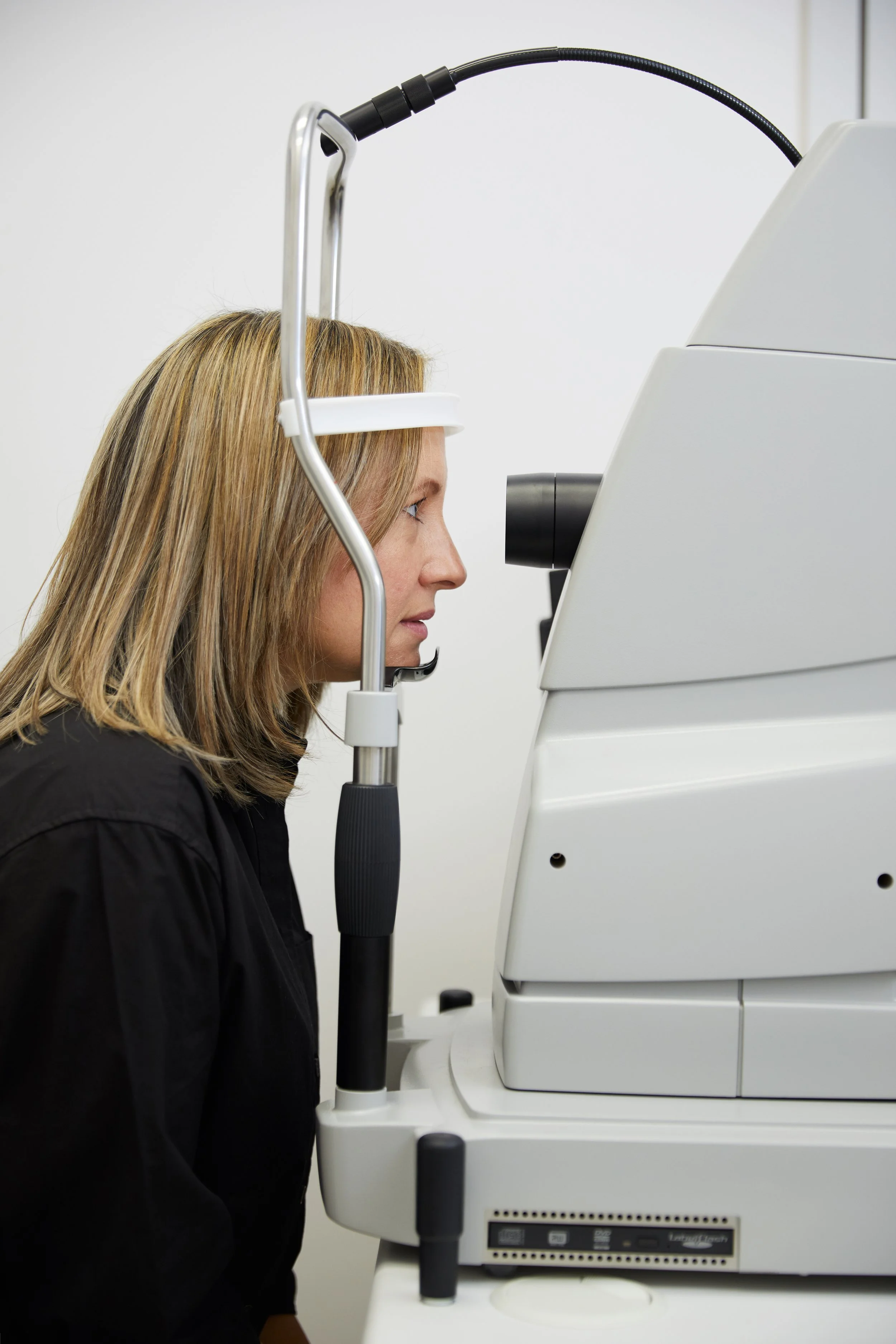
PRK
PHOTOREFRACTIVE KERATECTOMY
PRK reshapes your cornea from the surface, with no flap.
-
The cornea's thin outer layer (the epithelium) is gently removed
A laser reshapes the tissue underneath to match your prescription
A soft bandage contact lens protects your eye while it heals
The outer layer grows back on its own
-
PRK treats nearsightedness, farsightedness and astigmatism. Because it does not create a flap or an incision in the cornea, it may be a good option for people with thinner corneas, and for people who play contact sports or have physically active jobs.
-
Because the surface of your eye needs time to heal, PRK usually involves more discomfort at first and a slower return to clear vision than other procedures.
The tradeoff is that there's no flap in the cornea, which can make PRK a good fit for people with thinner corneas.
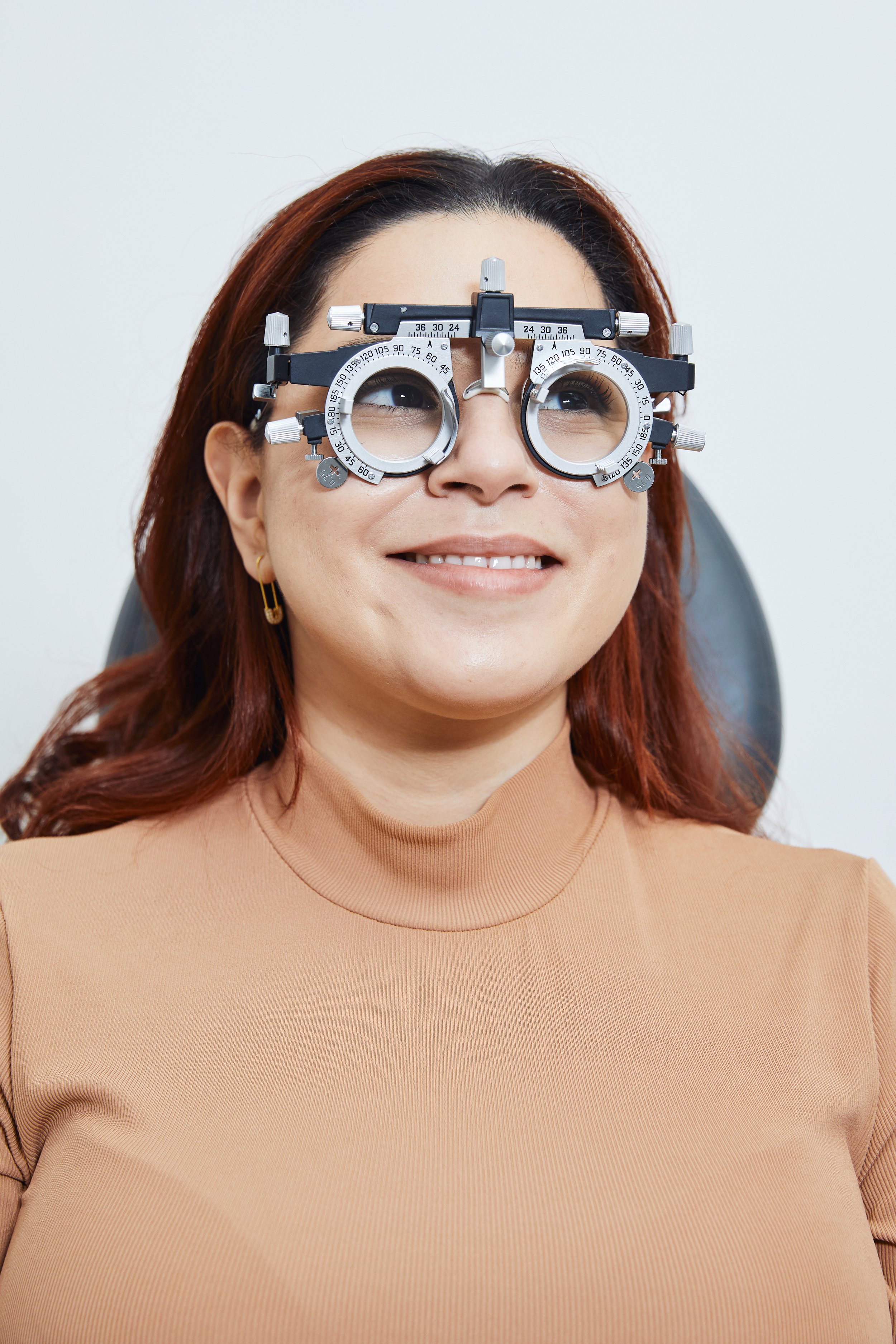
SMILE
SMALL INCISION LENTICULE EXTRACTION
SMILE reshapes your cornea from the inside, through a tiny opening, without the need of a flap.
-
A laser creates a small, lens-shaped piece of tissue (a lenticule) inside your cornea
The lenticule is then removed through a small incision
With that tissue gone, your cornea takes on a new shape that corrects your vision
-
SMILE mainly treats nearsightedness, with or without astigmatism.
Because the surface of your eye stays mostly intact, it may be a good option for some people with dry-eye concerns.
-
Recovery is usually faster than PRK, with less discomfort in the first few days.
AT A GLANCE
PRK vs SMILE
SMILE
PRK
HOW IT WORKS
Reshapes the cornea from the inside, through a small incision
Reshapes the cornea from the surface
TREATED CONDITIONS
Mainly nearsightedness, with or without astigmatism
Nearsightedness, farsightedness, and astigmatism
CORNEAL FLAP
None
None
CORNEAL INCISION
Small incision in the cornea
None
WHAT RECOVERY IS LIKE
Usually faster, with less discomfort
Slower, with more discomfort at first
WHAT THEY HAVE IN COMMON
Neither procedure creates a corneal flap. That can make both a strong option for people who play contact sports or whose work or hobbies put their eyes at risk of impact
IS LASER VISION CORRECTION RIGHT FOR YOU?
ELIGIBILITY
Neither procedure is better for everyone. The right choice depends on your individual eyes, because every patient is different.
For that reason, the process begins with a new patient evaluation. During the evaluation, Dr. Horta-Santini and his team will review the following:
Your current glasses or contact lens prescription, and whether it's been stable
The thickness and shape of your cornea
Your tear film and any dry-eye symptoms
Your overall eye health
Your lifestyle and what you want out of your vision
Based on those findings, we will recommend PRK, SMILE, or another option if laser vision correction is not the right fit for you.
POSSIBLE RISKS AND SIDE EFFECTS
Like any surgery, laser vision correction comes with some risks. These can include:
Dry eye
Glare, halos, or other changes in how sharp or clear things look
Vision that fluctuates while you heal
Undercorrection or overcorrection
Still needing glasses or contacts for some activities
A follow-up procedure (called an enhancement) to fine-tune your results
Before surgery, your doctor will review the benefits, risks, alternatives, and recovery process with you.
COST & FINANCING
The cost of laser vision correction depends on which procedure is right for your eyes.
Some patients may be eligible for a discount through their vision insurance plan. If you have an FSA and/or HSA account, you may be able to use those funds to pay for part or the entirety of your procedure.
We will review pricing with you after your evaluation, and we present you with our accepted payment methods and financing options.
FREQUENTLY ASKED QUESTIONS
-
The only way to know for sure is a new patient evaluation, during which we will examine your prescription, your corneas, and your overall eye health.
-
Neither is better; they are different procedures. LASIK reshapes the cornea after creating a thin flap on its surface. PRK and SMILE achieve the same goal without a flap, which may suit some eyes and lifestyles better. PRK and SMILE are the two procedures we offer.
-
We use numbing eye drops to keep you comfortable during the procedure. If you receive PRK, you can expect more discomfort in the first few days after the procedure while the surface of your eye heals. For SMILE, the recovery is typically more comfortable.
-
Recovery is different for PRK and SMILE. PRK usually involves more discomfort at first and a slower return to clear vision. SMILE is usually faster, with less discomfort. At your evaluation, Dr. Horta-Santini will explain what to expect for your procedure, including when you can return to work, drive and exercise.
-
Dr. Juan Horta-Santini, a board-certified ophthalmologist, performs every PRK and SMILE procedure himself. He and his team also handle your evaluation, so the same doctor who recommends your procedure is the one who performs it.
-
Your evaluation and follow-up visits take place at our office at 100-05 Roosevelt Ave, Suite 202, in Corona, Queens. Dr. Horta-Santini performs the procedure itself at a partner surgical center in Manhattan. If you are a candidate and schedule surgery, we will provide the location and all of the information you need before the day of your procedure.
-
How long your results last depends on your eyes. Laser vision correction doesn’t stop presbyopia, the natural loss of close-up focus that starts in your 40s, so you may still need reading glasses as you get older. Dr. Horta-Santini will explain what to expect for you at your evaluation.
-
Cost depends on which procedure is right for your eyes, so we'll go over pricing with you after your evaluation. We offer several payment methods and financing options to make it more manageable.
-
Your initial laser eye surgery evaluation may be covered by your vision insurance plan. The laser eye surgery procedure itself is considered elective surgery and must be paid out of pocket.
If you have an FSA or HSA plan, you may use those funds to cover the cost of your procedure.
CLEARER VISION BEGINS WITH A CONVERSATION
Request your evaluation, and we will help you determine the best option for your eyes.
Laser vision correction isn’t right for everyone. Like any surgery, PRK and SMILE have risks, such as dry eyes, glare or halos at night, and vision that may need a touch-up or glasses later. Results vary from person to person. Your evaluation will tell you if you’re a good candidate and what to expect.